
How to Build A Deck in Magic the Gathering Arena
Learn how to create a winning deck with our guide on How to Build A Deck in Magic the Gathering Arena.
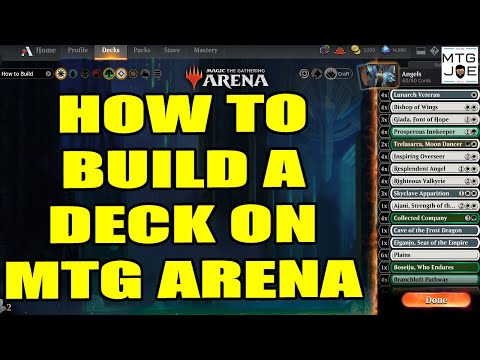
Magic the Gathering Arena is one of the most popular digital card games in the world, and building a successful deck is essential to compete in the game. Building a deck can be challenging, but with the right strategies and techniques, you can create a winning deck that can help you climb up the rankings. In this blog post, we'll be discussing how to build a deck in Magic the Gathering Arena, from collecting cards to balancing your deck and more.
The first step in building a deck is collecting cards. One of the best ways to collect cards is through drafting. Drafting is a format in which players open booster packs and select one card at a time until all cards have been chosen. This is a great way to collect cards, as it allows you to choose cards that fit your play style. You can earn booster packs by completing daily quests, participating in events, and by purchasing them with in-game currency or real money.
When collecting cards, it's important to focus on creating a collection of cards that will be helpful in deck building. This means collecting cards that have a high power level, are versatile, and have a good mana curve. A good mana curve means having a balance of low-cost, medium-cost, and high-cost cards.
There are five color schemes in Magic the Gathering Arena, each with its own philosophy and theme. The five color schemes are white, blue, black, red, and green. White is focused on protection and defense, blue on manipulation and control, black on sacrifice and death, red on aggression and speed, and green on growth and strength.
When choosing a color scheme, it's important to consider your play style. If you prefer a more aggressive style of play, red may be the best color for you. If you prefer a more defensive style of play, white may be the best color for you. It's also important to consider the cards you have collected and choose a color scheme that fits well with those cards.
"Learn what gaming latency is and how it impacts your play. Discover types,causes, and proven tips to reduce lag for a smoother, more responsivegaming experience."
Guide to enabling Cross-Save in your games
Enabling Cross-Save? This guide shows you how to link your accounts and syncgame progress seamlessly between consoles, PC, and mobile platforms.Unlock true gaming freedom.
How to Improve Reaction Time in Games
Boost your gaming performance with tips on how to improve reaction time. Enhance your skills and dominate the competition!
Performance mode vs. quality mode: which to choose?
Performance mode prioritizes smoother frame rates for fast-paced gameplay, whilequality mode offers higher visual fidelity at lower frame rates.Discover which graphics setting is right for your playstyle.
What is V-Sync and should you enable it?
Discover the pros and cons of V-Sync technology. Learn how it reduces screentearing and its impact on gaming performance. Find out if you shouldenable V-Sync for a smoother experience.
What is anti-aliasing and which is the best?
Learn what anti-aliasing is, how different types (MSAA, FXAA, TAA, etc.)work, and which setting is best for performance vs. visual quality in PC gaming.
What is motion blur and when to disable it
Learn what motion blur is in video games, when it enhances realism, and keyscenarios to disable it for better clarity and performance.
The best shooters for beginners in 2026
the top shooters for beginners in 2026. Our expert reviews and tips will help you choose the perfect game to start your shooting
The best PS Plus games to download
the best PS Plus games to download this month. Explore top titles,hidden gems, and must-play classics to enhance your gaming
What is input mapping and what is it used for?
Discover what input mapping is and how it allows flexible control customizationin software, hardware, and games. Learn its key uses and benefits for an efficient user experience.
best TAQ-V loadout in Warzone 2 season 3
Find out here best TAQ-V loadout in Warzone 2 season 3 and get ready to dominate your opponents.
How to fix PS5 Overheating
Check out our guide on How to fix PS5 Overheating and get back to gaming in no time.
How To Get Deepsight Harmonizer in Destiny 2
Find out How To Get Deepsight Harmonizer in Destiny 2 and become a legendary warrior!
How to complete Case the Place mission in Warzone 2 DMZ
Our expert guide will give you all the tips and tricks on How to complete Case the Place mission in Warzone 2 DMZ.
How to complete Air Traffic mission in Warzone 2 DMZ
Find out How to complete Air Traffic mission in Warzone 2 DMZ and take your gaming experience to the next level!
Magic the Gathering Arena is one of the most popular digital card games in the world, and building a successful deck is essential to compete in the game. Building a deck can be challenging, but with the right strategies and techniques, you can create a winning deck that can help you climb up the rankings. In this blog post, we'll be discussing how to build a deck in Magic the Gathering Arena, from collecting cards to balancing your deck and more.
Collecting Cards
The first step in building a deck is collecting cards. One of the best ways to collect cards is through drafting. Drafting is a format in which players open booster packs and select one card at a time until all cards have been chosen. This is a great way to collect cards, as it allows you to choose cards that fit your play style. You can earn booster packs by completing daily quests, participating in events, and by purchasing them with in-game currency or real money.
When collecting cards, it's important to focus on creating a collection of cards that will be helpful in deck building. This means collecting cards that have a high power level, are versatile, and have a good mana curve. A good mana curve means having a balance of low-cost, medium-cost, and high-cost cards.
Choosing a Color Scheme
There are five color schemes in Magic the Gathering Arena, each with its own philosophy and theme. The five color schemes are white, blue, black, red, and green. White is focused on protection and defense, blue on manipulation and control, black on sacrifice and death, red on aggression and speed, and green on growth and strength.
When choosing a color scheme, it's important to consider your play style. If you prefer a more aggressive style of play, red may be the best color for you. If you prefer a more defensive style of play, white may be the best color for you. It's also important to consider the cards you have collected and choose a color scheme that fits well with those cards.
Balancing Your Deck
A balanced deck is essential for success in Magic the Gathering Arena. A balanced deck should have a good mix of low-cost, medium-cost, and high-cost cards. Low-cost cards are important for early game play, medium-cost cards are important for mid-game play, and high-cost cards are important for late-game play.
When balancing your deck, it's important to consider the mana curve. The mana curve is the distribution of cards in your deck based on their mana cost. A good mana curve means having a balance of low-cost, medium-cost, and high-cost cards. This ensures that you have a card to play at any point in the game.
Choosing Similar Mechanics
Choosing cards with similar mechanics is important for success in Magic the Gathering Arena. Similar mechanics are cards that work well together and complement each other. For example, if you have a card that creates tokens, it's a good idea to have other cards that work well with tokens, such as cards that buff or protect them.
When choosing cards with similar mechanics, it's important to consider the cards you have collected and choose cards that work well together. This ensures that your deck is cohesive and has a clear strategy.
Starting Deck Size
Deciding on a starting deck size is important for success in Magic the Gathering Arena. The starting deck size is the number of cards in your deck at the beginning of the game. The default starting deck size is 60 cards, but this can be adjusted to fit your play style.
When deciding on a starting deck size, it's important to consider the cards you have collected and choose a size that fits well with those cards. A smaller deck size means you will have a better chance of drawing your best cards, but it also means you have less room for error. A larger deck size means you have more room for error, but it also means you have a lower chance of drawing your best cards.
Practice
Practice is essential for success in Magic the Gathering Arena. Practicing with your cards allows you to become familiar with their strengths and weaknesses and develop strategies for using them effectively. You can practice by playing against the computer or by playing against other players online.
When practicing, it's important to experiment with different cards and strategies and learn from your mistakes. This allows you to refine your deck and improve your play style.
Building a successful deck in Magic the Gathering Arena can be challenging, but with the right strategies and techniques, it's possible to create a winning deck. By collecting cards, choosing a color scheme, balancing your deck, choosing similar mechanics, deciding on a starting deck size, and practicing, you can develop a winning strategy and climb up the rankings.
Mode:
Other Articles Related
Guide to Understanding Latency in Video Games"Learn what gaming latency is and how it impacts your play. Discover types,causes, and proven tips to reduce lag for a smoother, more responsivegaming experience."
Guide to enabling Cross-Save in your games
Enabling Cross-Save? This guide shows you how to link your accounts and syncgame progress seamlessly between consoles, PC, and mobile platforms.Unlock true gaming freedom.
How to Improve Reaction Time in Games
Boost your gaming performance with tips on how to improve reaction time. Enhance your skills and dominate the competition!
Performance mode vs. quality mode: which to choose?
Performance mode prioritizes smoother frame rates for fast-paced gameplay, whilequality mode offers higher visual fidelity at lower frame rates.Discover which graphics setting is right for your playstyle.
What is V-Sync and should you enable it?
Discover the pros and cons of V-Sync technology. Learn how it reduces screentearing and its impact on gaming performance. Find out if you shouldenable V-Sync for a smoother experience.
What is anti-aliasing and which is the best?
Learn what anti-aliasing is, how different types (MSAA, FXAA, TAA, etc.)work, and which setting is best for performance vs. visual quality in PC gaming.
What is motion blur and when to disable it
Learn what motion blur is in video games, when it enhances realism, and keyscenarios to disable it for better clarity and performance.
The best shooters for beginners in 2026
the top shooters for beginners in 2026. Our expert reviews and tips will help you choose the perfect game to start your shooting
The best PS Plus games to download
the best PS Plus games to download this month. Explore top titles,hidden gems, and must-play classics to enhance your gaming
What is input mapping and what is it used for?
Discover what input mapping is and how it allows flexible control customizationin software, hardware, and games. Learn its key uses and benefits for an efficient user experience.
best TAQ-V loadout in Warzone 2 season 3
Find out here best TAQ-V loadout in Warzone 2 season 3 and get ready to dominate your opponents.
How to fix PS5 Overheating
Check out our guide on How to fix PS5 Overheating and get back to gaming in no time.
How To Get Deepsight Harmonizer in Destiny 2
Find out How To Get Deepsight Harmonizer in Destiny 2 and become a legendary warrior!
How to complete Case the Place mission in Warzone 2 DMZ
Our expert guide will give you all the tips and tricks on How to complete Case the Place mission in Warzone 2 DMZ.
How to complete Air Traffic mission in Warzone 2 DMZ
Find out How to complete Air Traffic mission in Warzone 2 DMZ and take your gaming experience to the next level!