
How to Overclock Your CPU Safely
Causes of the Problem (Why You Need to Be Careful)
Before we touch any settings, it’s crucial to understand what we’re managing and the risks involved. Overclocking isn't dangerous if done correctly, but here’s what can go wrong if it’s not:Quick Solution (For the Impatient Power User)
If you have an unlocked Intel "K" series or any modern AMD Ryzen CPU, a quality cooler, and a Z-series (Intel) or B/X-series (AMD) motherboard, here’s the safest fast path:Detailed Step-by-Step Guide to a Safe Manual Overclock
Prerequisites: An unlocked CPU, a motherboard that supports overclocking, a robust CPU cooler (a good air cooler or 240mm+ AIO liquid cooler), and monitoring software like HWiNFO64 and a stress test like Cinebench R23 and Prime95.Step 1: Establish Your BaselineBoot into your system normally. Open HWiNFO64 and run a multi-core test in Cinebench R23. Note your score and, most importantly, your maximum CPU temperature (Tdie/Temp) and clock speeds under load. This is your "before" snapshot.Step 2: Access the BIOS/UEFI
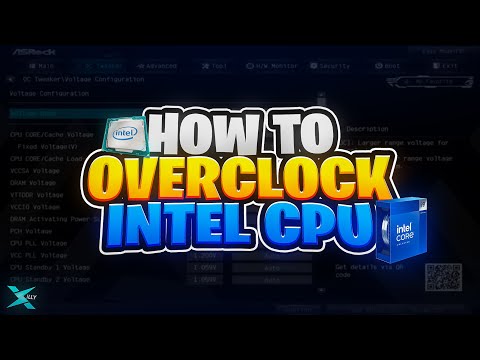
Restart your PC and press the key to enter BIOS/UEFI (Delete, F2, F10 are common). Navigate to the advanced tuning section, often called "AI Tweaker" (ASUS), "OC" (MSI/Gigabyte), or "Overclocking."Step 3: Set a Modest CPU Multiplier Increase
Find the setting for "CPU Core Ratio" or "Multiplier." Modern overclocking adjusts this multiplier, not the base clock (BCLK). Start by increasing the all-core multiplier by +1 or +2 from its default turbo boost value. (E.g., if your CPU's max boost is 4.7GHz, try setting all cores to 4.8GHz).Step 4: Apply a Small Voltage Increase
Now, find the "CPU Core Voltage" or "VCore" setting. Crucially, change it from "Auto" to "Manual" or "Override." Start with a very small increase. If your default under load was ~1.25V, try setting it to 1.28V manually. Never jump to high voltages like 1.4V immediately. The goal is to find the lowest stable voltage for your target speed.

Step 5: Test for Stability and Thermals
Save BIOS settings (F10) and boot to Windows. Immediately open HWiNFO64 tomonitor temperatures. Now, run Cinebench R23 multi-core test. Did itcomplete? Good. Now, monitor your peak temperature. Your absolute limit should be 85-90°C under a sustained stress test. If you're below 85°C and stable, proceed to Step 6. If it crashes, youneed slightly more voltage (go back to BIOS, add +0.01V). Iftemperatures are too high, your overclock is too aggressive for yourcooler; lower the multiplier or improve cooling.
Step 6: The Torture Test – Prime95
If Cinebench is stable, the real test is Prime95. Run the "Small FFTs"test for at least 30 minutes. This is the ultimate stability and thermal test. Watch HWiNFO64 like a hawk. If your system doesn't crash, freeze, or throw errors (called "workers" stopping in Prime95), andtemperatures remain under control (90-95°C max is typical here, butlower is better), your overclock is likely stable.
Step 7: Iterate and Find Your Limit
If your system passes Step 6, you can try to go further. Go back to BIOS.Increase the multiplier by +1 again. Re-test with Cinebench and Prime95. You may need to increase voltage slightly again (in increments of0.01V-0.02V). Continue this iterative process until you either:
- Hit your thermal limit (~85°C in Cinebench, ~95°C in Prime95).
- Require an uncomfortably high voltage (consult community guidelines for yourspecific CPU; often staying under 1.35V for daily use is safe with goodcooling).
- Achieve your desired performance goal.
Step 8: Final Real-World Testing
A Prime95-stable overclock should be game-stable. But the final test is your actual use case. Play "Cyberpunk 2077" for an hour. Play "Counter-Strike 2" for a full session. If you experience no crashes, freezes, or graphical oddities, your overclock is a success.
Step 9: Document Your Settings
Take a photo of your final BIOS settings page! Write down your final multiplier and voltage. This is your golden profile.
Step 10: Consider a BIOS Profile
Most BIOSes allow you to save profiles. Save your stable overclock settingsto a profile (e.g., "Daily 5.0GHz"). Save your default settings toanother (e.g., "Stock"). This lets you switch back instantly if needed.
How to Prevent Issues (Sustaining Your Stable Overclock)
- Invest in Superior Cooling: Your overclocking ceiling is defined by your cooling. A high-end air cooler or a 280/360mm AIO is a worthwhile investment.
- Prioritize Case Airflow: Ensure your PC case has a good intake/exhaust fan setup. Cool ambient air is vital.
- Maintain Your System: Dust your filters, fans, and radiators every few months. Dust acts as an insulator, trapping heat.
- Monitor Regularly: Keep HWiNFO64 or a lightweight monitor like MSI Afterburner's overlayrunning occasionally in-game to ensure temperatures remain in check,especially during summer months.
- Avoid the "Voltage Cop-Out": Don't just crank voltage to solve all instability. First, check if your multiplier is simply too high for your chip's innate capability (the"silicon lottery").
Frequently Asked Questions
Q1: Will overclocking my CPU definitely improve my FPS in games?
A: It depends. If your game is "CPU-bound" (like many simulation,strategy, or competitive esports titles), yes, you'll likely see atangible FPS increase. If you're playing a graphically intensive game at 4K and are "GPU-bound," the gain may be minimal. Overclocking ensuresyour CPU isn't the bottleneck.
Q2: How long will my CPU last if I overclock it safely?
A: With a moderate overclock, staying within safe voltage and temperatureguidelines, your CPU will likely become obsolete due to age (5-7+ years) before it degrades from a well-managed overclock.
Q3: Can I overclock a non-"K" Intel CPU or a non-"X" AMD CPU?
A: Modern non-K Intel CPUs have very limited overclocking. Most AMD RyzenCPUs are unlocked for overclocking, regardless of the "X" suffix. Always check your specific model's specifications.
Q4: My PC crashed during stress testing. Did I break something?
A: Almost certainly not. Modern systems have extensive protections. Acrash during a stress test simply means the overclock is unstable.Reboot, go back to BIOS, and either reduce the multiplier or increasethe voltage slightly, as outlined in the steps.
Q5: Is overclocking my RAM as important?
A: Yes! Enabling XMP/EXPO for your RAM is often the single biggest performance gain for minimaleffort and is considered step zero before CPU overclocking. It ensuresyour RAM runs at its advertised speed.
You’ve now got the knowledge to push your hardware responsibly and unlock theperformance you paid for. The journey from a stock setup to afinely-tuned machine is incredibly rewarding, knowing every frame is aresult of your careful calibration.
Ready to see what your rig is truly capable of? Dive into your BIOS with confidence. And when you hit that sweet, stable overclock, come back and share your success story or your before-and-after benchmarks in the comments below—we’d love to celebrate with you! If you found this guide helpful, considersharing it with other builders in your community. For more deep divesinto PC optimization, gaming performance, and hardware guides, exploreour full library of articles. Game on
Other Articles Related
How to Set Up Surround Sound for GamingElevate your gaming experience! Learn how to set up surround sound at home,from choosing the right speaker layout to calibrating audio settings for immersive gameplay.
How to Apply Thermal Paste Correctly
Step-by-step guide for correctly applying thermal paste on CPUs and GPUs. Learnoptimal methods, common mistakes, and best practices to maximize cooling and hardware performance.
How to Improve Cooling in Your PC
Learn how to boost airflow, optimize components, and reduce heat for acooler, faster, and more stable PC. Discover step-by-step coolingupgrade tips.
How to Clean Your PC for Better Performance
Learn easy steps to clean your PC for better performance—remove junk files,manage startup programs, update drivers, and optimize settings.
How to Overclock Your CPU Safely
Step-by-step guide for safely overclocking your CPU. Learn proper cooling, voltagetuning, and stability testing to boost performance without riskingdamage. Achieve a stable overclock with confidence.
How to Fix High CPU Usage While Gaming
Fix high CPU usage while gaming with these effective troubleshooting tips.Learn to optimize settings, update drivers, and boost gaming performance effortlessly.
How to Boost Wi‑Fi Signal for Gaming
Maximize your gaming performance with expert tips on how to boost Wi‑Fi signalstrength. Reduce lag, eliminate drops, and ensure a stable connection.
How to Reduce Lag in Cloud Gaming
Level up your cloud gaming experience! Learn expert tips to reduce lag,optimize streaming quality, and enjoy smoother gameplay with ouractionable guide.
How to Overclock Your GPU Safely
Maximize GPU performance safely! Learn step-by-step GPU overclocking, essentialtools, stability testing, and temperature monitoring to boost speedwithout damage.
How to Get All SpongeBob Cosmetics in Fortnite
guide to unlocking all SpongeBob cosmetics in Fortnite. Dive into tips, tricks, and strategies to enhance your gaming
How to Fix High GPU Usage
"Learn effective solutions to reduce high GPU usage, improveperformance, and prevent overheating. Step-by-step troubleshooting guide for gamers and creators."
How to Collect Shiny Llamas in Fortnite
guide to collecting shiny llamas in Fortnite. Unlock tips, strategies, and locations to enhance your gaming experience
How to Fix High CPU Usage While Gaming
Fix high CPU usage while gaming with these effective troubleshooting tips.Learn to optimize settings, update drivers, and boost gaming performance effortlessly.