What Is a Skill Tree
What Is a Skill Tree? The Core Definition
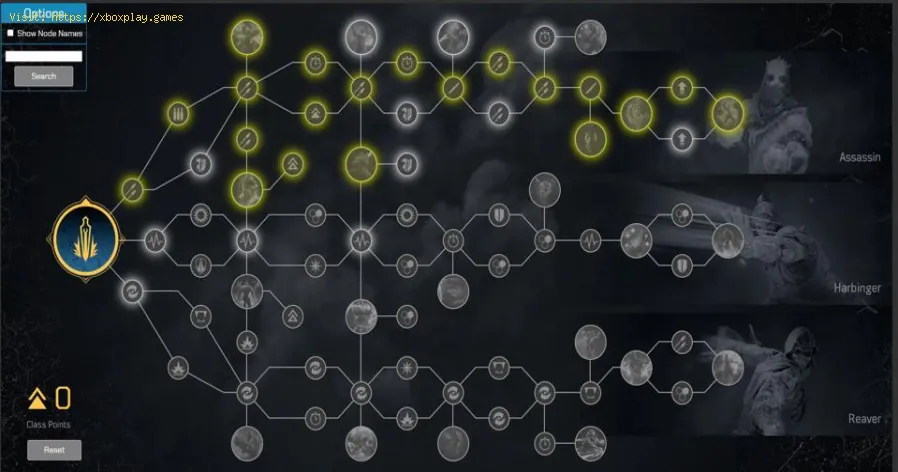
A Skill Tree (also called a talent tree, ability web, or tech tree in strategy games) is a visual representation of unlockable character upgrades, typically organized in a branching, hierarchical structure. Players spend earned resources (like Skill Points, Experience, or Currency) to "unlock" or "purchase" nodes on the tree, each granting a new ability, passive stat boost, or gameplay modifier.Think of it as a choose-your-own-adventure book for your character's power. Each choice opens up new possibilities while closing off others (at least temporarily), encouraging specialization and replayability.The Core Anatomy of a Skill Tree
While designs vary, most skill trees share common elements:- Active Skills: New abilities you can use (e.g., "Fireball," "Stealth Dash").
- Passive Skills: Permanent stat boosts or modifiers (e.g., "+15% Critical Hit Chance," "Arrows now pierce one enemy").
- Augments/Modifiers: Nodes that enhance an already-unlocked skill (e.g., "Fireball now explodes on impact," "Stealth Dash leaves a decoy").
Why Are Skill Trees So Effective? The Psychology of Progression
Skill trees tap into powerful psychological drivers that keep players engaged:- Tangible Progression: They provide a clear, visual map of your growth. You can see how far you've come and where you're going.
- Meaningful Choice: Every skill point spent feels significant. You are actively deciding your character's identity, which creates a deep sense of ownership and attachment.
- Anticipation & Goal-Setting: Seeing a powerful ability a few nodes away gives you a clear short-term goal. "I just need two more levels for that awesome ultimate move!"
- Replay Value: The existence of multiple branches encourages starting a new game to try a completely different build (e.g., a Strength warrior vs. a Dexterity rogue).
- Complexity Management: They take a potentially overwhelming list of 100+ abilities and organize them into a digestible, learnable structure.
Major Types of Skill Trees
Not all trees are created equal. The design philosophy shapes your experience.1. The Class-Based Tree (The Specialist)- How it works: Each character class (Warrior, Mage, Rogue) has its own unique, deep tree. Your choices deepen your specialization within that class.
- Example: Diablo IV, World of Warcraft. You choose a Druid, then specialize further into a Werebear tank or a spellcasting Storm Druid.
- Player Impact: Encourages mastery of a specific fantasy and role within a team.
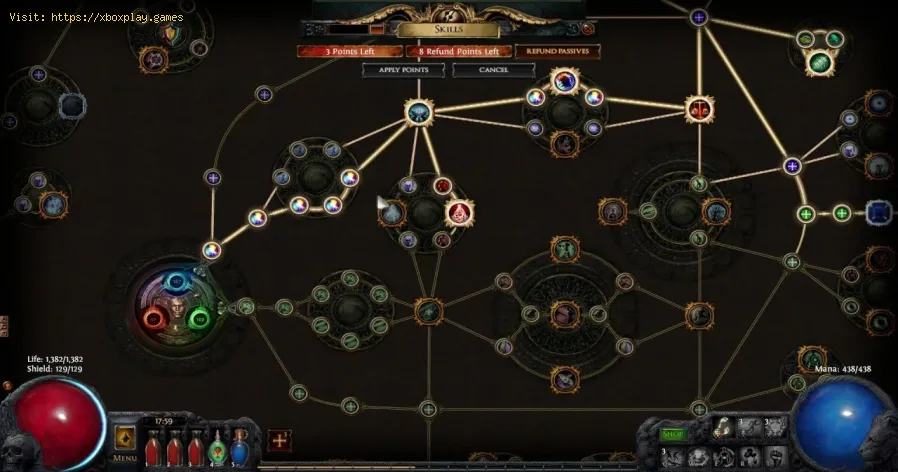
- How it works: A single, massive tree available to every character. You can mix and match nodes from any "branch" to create a truly custom hybrid.
- Example: Path of Exile's gigantic passive skill web, Final Fantasy X's Sphere Grid.
- Player Impact: Offers near-limitless theory-crafting potential and unique builds, but can be overwhelming for newcomers.
- How it works: Less of a "tree" and more of a linear path or a series of parallel lines. Choices are limited, often just an order of acquisition.
- Example: Many older RPGs or action games like God of War (2018), where you upgrade a defined set of weapons and skills.
- Player Impact: Streamlines progression, reduces anxiety of choice, and ensures the character grows in a narratively consistent way.
4. The Dual/Multi-Tree System (The Balancer)
- How it works: A character has two or three core trees, often representing a moralalignment (Light/Dark) or a core conflict. Investing in one tree maylock or weaken the other.
- Example:Star Wars: Knights of the Old Republic (Light Side vs. Dark Side), Infamous (Good vs. Evil).
- Player Impact: Tightly integrates progression with narrative and role-playing choices, making your build a statement of character.
How to Navigate a Skill Tree Like a Pro: A Strategic Guide
Facing a massive tree can be paralyzing. Follow this approach:
Step 1: Identify Your Playstyle Fantasy.
Before spending a single point, ask: "What fantasy do I want?" A nimbleassassin? An unkillable tank? A summoner? Let this vision guide all your choices.
Step 2: Scout the "Capstone" Abilities.
Look at the end of each major branch. Those ultimate skills are your long-term goals. Plan a path backward from them.
Step 3: Prioritize Foundation Over Flash.
Early on, invest in passive stats and core abilities that are always useful (damage increases, survivability, resource generation). Avoid highlysituational "flashy" skills until your foundation is solid.
Step 4: Look for Synergies.
The best builds come from nodes that work together. Does a passive makeyour burning damage last longer? Look for active skills that set enemies on fire. This combo-driven thinking is key to powerful builds.
Step 5: Know If Respecs Are Possible.
Can you refund your points, and at what cost? Games like Elden Ring allow limited respecs. Knowing this can ease anxiety and encourage experimentation.
Common Pitfalls & How to Avoid Them
- The "Jack of All Trades" Trap: Spreading points too thinly across many branches often creates a weak character that's good at nothing. Commit to a path.
- Ignoring Survivability: In action RPGs, don't pour every point into damage. A few points inhealth, armor, or dodge can be the difference between life and death.
- Following an Online Build Blindly: While build guides are helpful, copying one node-for-node without understanding why it works robs you of the learning and ownership. Use them as inspiration, not scripture.
Skill Trees Beyond RPGs
The concept has spread to nearly every genre:
- Shooters:Call of Duty's create-a-class and weapon perk systems.
- Strategy Games:Civilization's tech and civic trees that guide your empire's development.
- Action-Adventure:The Legend of Zelda: Tears of the Kingdom's battery and ability upgrades.
Frequently Asked Questions (FAQs)
Q: What's the difference between a Skill Tree and a Talent Tree?
A: It's mostly semantics. "Skill Tree" is the broader, more common term. "Talent Tree" is often used in MMORPGs like World of Warcraft to refer to the high-level specialization choices within a class's broader skill set.
Q: Can I "break" my character with a bad skill tree build?
A: In most modern games, no. While you can make a suboptimal build, few games let you create a truly "soft-locked" character. The existence of respec options or thefundamental power of leveling up usually ensures you can still finishthe game, even if on a harder difficulty.
Q: What game has the biggest/best skill tree?
A:"Biggest" is arguably Path of Exile, with its labyrinthine passive web of 1,400+ nodes. "Most Iconic" often goes to Final Fantasy X's Sphere Grid for its sheer scope at the time. "Most Innovative" could be Final Fantasy XII's License Board, which directly tied skill unlocks to equipped gear.
Q: Should I focus on one branch or explore multiple?
A: As a general rule for beginners: Focus 80-90% of your points on one primary branch to reach its powerful capstone skills efficiently. Use the remainingpoints on a secondary branch for key supporting passives or a singleuseful active skill.
Q: Do all RPGs have skill trees?
A: No. Classic RPGs often use a class-and-level system where you automatically gain predefined abilities at set levels (e.g., older Final Fantasy games, Dragon Quest). Skill trees represent a shift toward player-driven customization.
The skill tree is more than a menu; it's a statement of intent. It turnsthe abstract concept of "getting stronger" into a tangible,choice-filled journey. It's where theory-crafting meets gameplay, andwhere your unique playstyle is born.
What's the most memorable skill tree you've ever engaged with? Was it the one that let you build a wildly overpowered character, orone where every choice felt agonizingly meaningful? Share your storiesand favorite builds in the comments below. If you're stuck planning abuild in a specific game, tell us which one and what you're going for,and our community can offer suggestions. For deep dives into themeta-builds of games like Diablo IV, Elden Ring, or Baldur's Gate 3, explore our dedicated build guides. Now, go spend those skill points wisely
Other Articles Related
What Is a Sandbox Gamethe world of sandbox games! Learn what defines this genre, its keyfeatures, and why players love the freedom to create and explore.
What Is a Skill Tree
Explore the intricacies of skill trees, their role in gaming, and howthey empower players to customize abilities.
The Best Couch Co‑Op Games
Explore our curated list of the best couch co-op games perfect forbonding with friends and family. Get ready for laughter
The Best Games for High‑End PCs
the best games for high-end PCs that deliver stunning graphics and immersive gameplay. Elevate your gaming experience
The Best RPGs for New Players
Discover the best RPGs for new players! Dive into immersive worlds, engaging stories, and easy-to-learn mechanics.
How to Play Better in Team‑Based Games
strategies to enhance your skills in team-based games. Learn tips and tricks for better teamwork and gameplay.
How to Improve Movement in Shooters
effective strategies to enhance movement in shooter games. Boost your gameplay and dominate the competition
What Is a HUD in Video Games
Explore what a HUD is in video games and its importance in deliveringessential information to players. Enhance your gaming
What Is Motion Sickness in Gaming
Learn about motion sickness in gaming, including its triggers, effectson players, and tips to reduce symptoms
Best Games for Competitive Players
the best couch co-op games that bring friends and family together forunforgettable gaming experiences. Dive into fun and teamwork
The Best Couch Co‑Op Games
Explore our curated list of the best couch co-op games perfect forbonding with friends and family. Get ready for laughter
The Best Games for High‑End PCs
the best games for high-end PCs that deliver stunning graphics and immersive gameplay. Elevate your gaming experience